
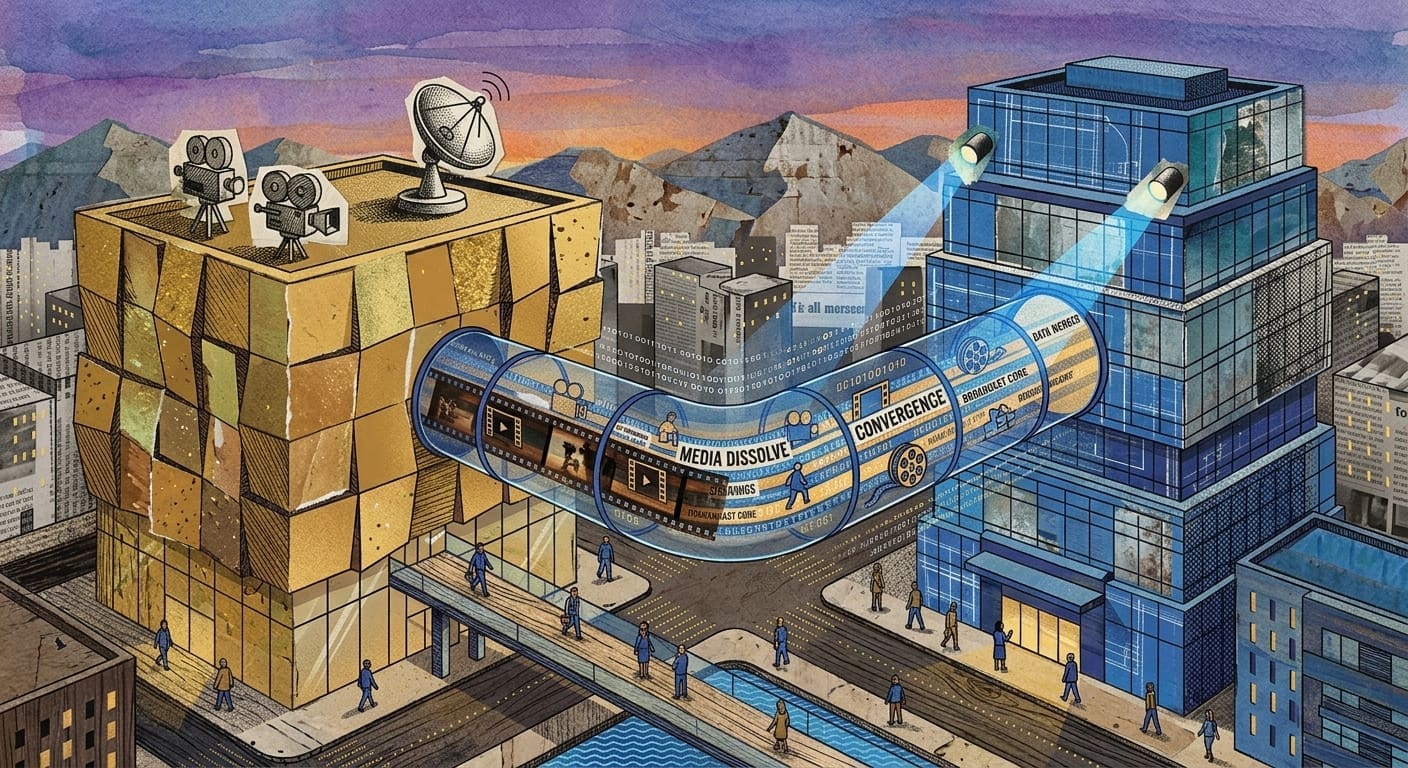
The global media landscape reached a definitive turning point in September 2026, when a federal court in California approved a consent decree that cleared the final legal hurdle facing the massive merger between Paramount and Warner Bros. The settlement brought an end to an antitrust challenge mounted by a coalition of 12 states led by California’s attorney general, who had sought to halt the transaction over concerns regarding market dominance and potential job cuts. With that ruling, the combination now holds clearance across nearly 70 jurisdictions, following approvals from the U.S. Department of Justice as well as regulators in the European Union, the United Kingdom, Australia, and Canada.
Regulators, including the DOJ, determined that the transaction would not harm competition across streaming, linear television, or theatrical distribution. In doing so, they opened the door to an unprecedented concentration of cultural assets. Under one corporate roof sits a vast intellectual property portfolio that brings together DC Comics, Harry Potter, HBO, and Cartoon Network with Star Trek, Top Gun, Paramount Pictures, Nickelodeon, and Showtime.
That shared catalog will fundamentally reshape audience touchpoints across both traditional and digital distribution channels. In the direct-to-consumer streaming arena, the combined enterprise brings subscription services HBO Max/Max and Paramount+ alongside ad-supported platforms Pluto TV and Discovery+. On linear pay television, the roster unites major networks such as CBS, Discovery, HGTV, Food Network, and TNT with MTV, Comedy Central, and BET. The union also reshapes live broadcasting by housing both CNN and CBS News within the same corporate structure, while consolidating major athletic broadcasts. By bringing together CBS Sports, TNT Sports, and Eurosport, the company commands a rights portfolio that includes the NFL, UEFA Champions League, Premier League, and the Olympic Games.
Yet the architecture supporting this media colossus comes with significant structural weight. The acquisition is financed by the Ellison family, with Larry Ellison guaranteeing $47.5 billion in equity. Additional funding relies on $24 billion in non-voting capital contributions from sovereign wealth funds in Saudi Arabia, Qatar, and the United Arab Emirates. Alongside that equity, the transaction incorporates $44 billion in bonds and $7.5 billion in bank loans, saddling the consolidated company with a total debt load exceeding $87 billion.
To balance that balance sheet, management has promised investors $6 billion in annual synergies and cost reductions within three years. As the newly united entertainment giant moves from the courtroom to execution, delivering on those financial targets while navigating its enormous debt burden will define the operational reality behind its sprawling content kingdom.